Sam Griffin · 4 September 2026
Uncovering Trade Networks Through the Analysis of Prehistoric Ceramic Burial Containers
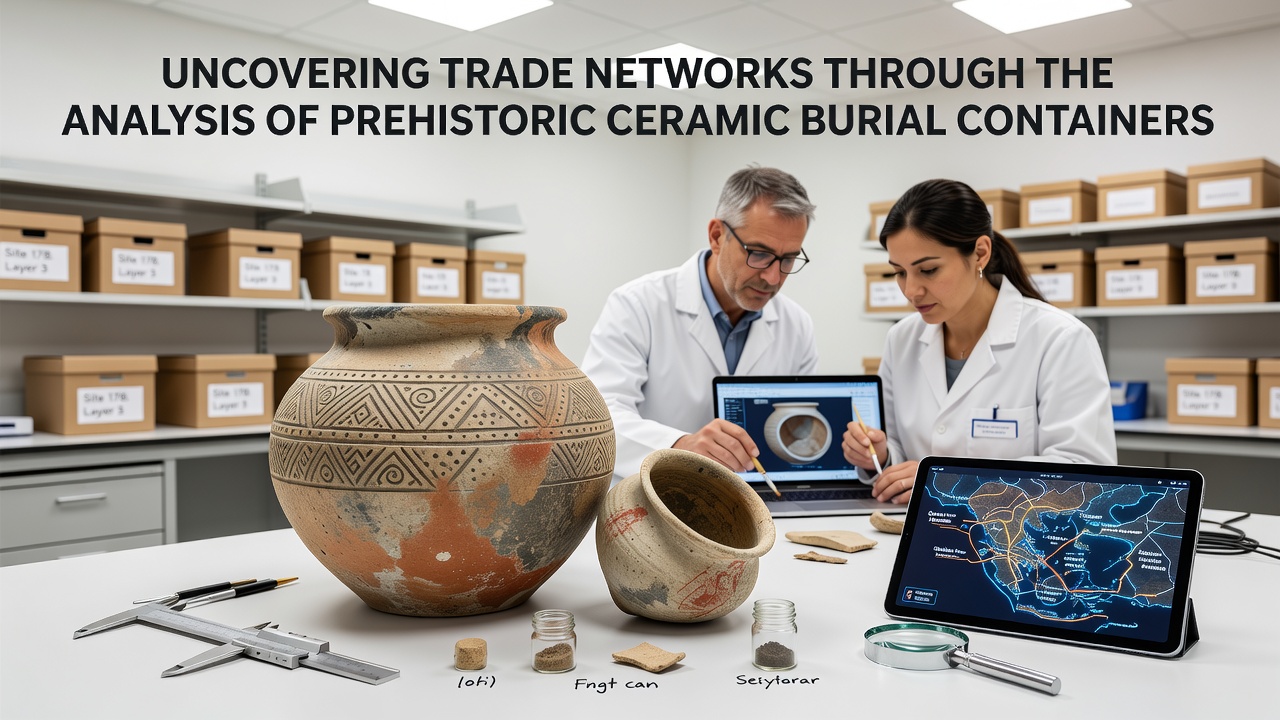
Researchers have long turned to prehistoric ceramic burial containers as key evidence for mapping ancient trade routes, and analysts examine these vessels through chemical composition studies, stylistic comparisons, and sourcing techniques that reveal connections across distant regions. Data from multiple excavation sites show patterns where specific clay types and temper materials appear far from their geological origins, indicating exchange systems that operated thousands of years ago. Those who've studied these artifacts note how burial urns often traveled as part of ritual or status goods rather than everyday trade items, which helps distinguish specialized networks from broader commodity flows.
Analytical Techniques Applied to Ceramic Vessels
Scientists apply neutron activation analysis and X-ray fluorescence to determine the elemental makeup of ceramic pastes, while petrographic thin-section examination identifies mineral inclusions that point to particular clay beds and production centers. Observers note that when isotopic ratios in the clay match known geological formations hundreds of kilometers away, the evidence points directly to transport rather than local manufacture. Researchers discovered that some containers from Neolithic sites in Europe contain volcanic temper sourced from Mediterranean islands, and similar methods applied in North American contexts link Mississippian period urns to clay deposits in the Ohio River valley. These findings accumulate because each new sample adds data points that refine maps of prehistoric interaction spheres.
Stylistic and Contextual Evidence
Design motifs, handle shapes, and surface treatments on burial containers also serve as markers of cultural transmission, and experts compare these features across assemblages to trace diffusion along probable trade corridors. One study revealed that incised patterns on vessels from the Balkans appear in modified forms at sites along the Danube, suggesting both material exchange and the movement of potters or ideas. People who've examined burial contexts find that containers placed with high-status individuals often incorporate exotic materials, whereas those in common graves reflect more localized production, which sharpens the distinction between elite trade networks and everyday exchange. What's interesting is how these stylistic threads connect with compositional data to build multi-layered reconstructions of prehistoric economies.
Regional Case Examples
In the American Southwest, analysts traced turquoise-inlaid ceramic containers to sources in the Southwest and Mesoamerica, and figures from excavation reports indicate repeated movement of finished goods along established trails by 1000 CE. European researchers have documented similar patterns with Bell Beaker vessels that carried distinctive pottery forms from the Iberian Peninsula into central and northern regions, and the consistent presence of non-local clays supports models of mobile craft specialists. Australian archaeologists studying coastal sites have identified shell-tempered burial containers whose clay signatures match inland quarries, revealing trade corridors that linked marine and terrestrial communities over long distances. Each region contributes distinct datasets, yet the underlying analytical approaches remain comparable across projects.
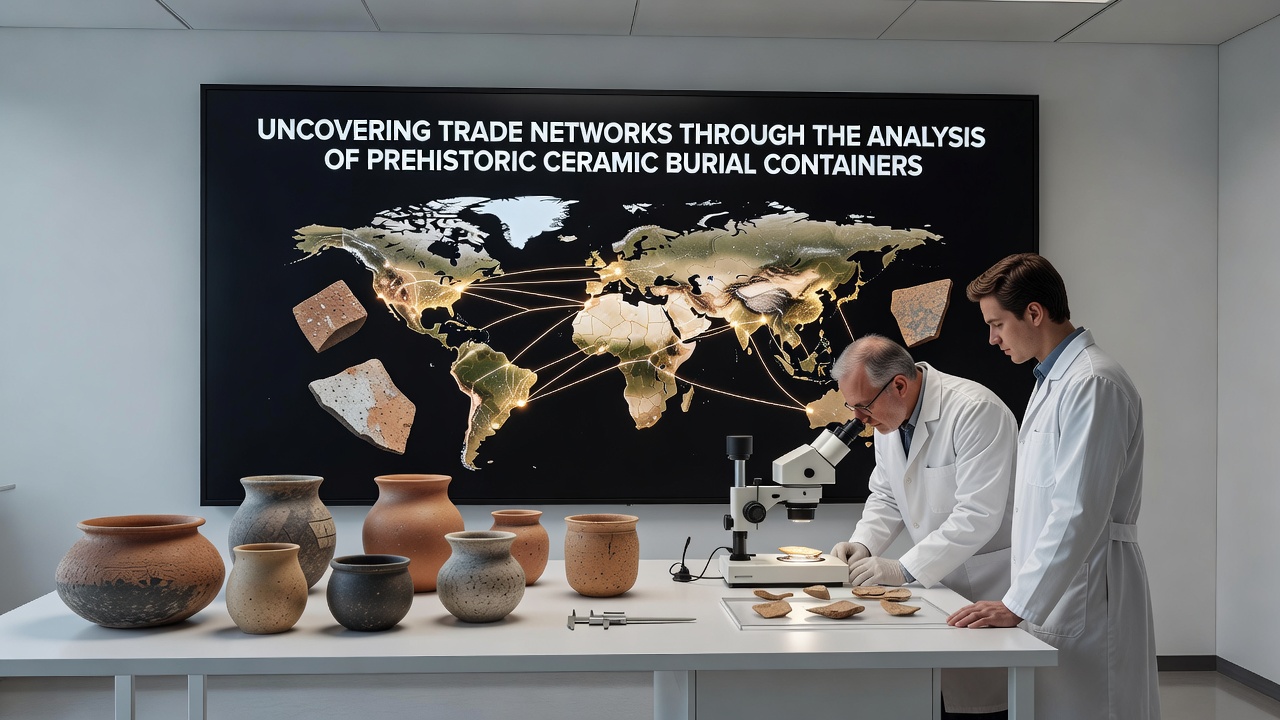
Turns out that combining multiple lines of evidence produces more robust network models than any single technique alone, and recent projects integrate GIS mapping with chemical results to visualize probable routes. The reality is that preservation biases affect the record, since many containers survive only in funerary contexts, yet those survivals still yield reliable sourcing information when sampling strategies account for post-depositional alteration. Researchers continue to refine calibration standards for analytical instruments, which improves the precision of origin attributions and allows finer resolution of overlapping exchange systems.
Developments Anticipated in September 2026
An international symposium scheduled for September 2026 will convene specialists from multiple continents to compare results from ongoing ceramic sourcing projects, and organizers expect presentations on new portable XRF devices that enable field-based analysis without transporting fragile artifacts. Participants plan to discuss standardized protocols for reporting isotopic data so that datasets from different laboratories become more interoperable, and early registration figures indicate strong interest from both academic and museum-based researchers. These gatherings often generate collaborative datasets that accelerate the mapping of previously unrecognized connections between regions.
Challenges and Methodological Advances
Contamination from burial environments can alter surface chemistry, yet analysts now use laser ablation techniques to sample interior layers that remain less affected, and this approach has increased the reliability of origin assignments in recent publications. Observers note that ethical considerations around destructive sampling continue to shape research design, prompting greater reliance on non-invasive methods such as portable spectrometry and 3D morphological comparisons. Those who've reviewed grant applications observe that funding agencies increasingly require open-access data sharing, which allows independent teams to test and extend network reconstructions derived from ceramic evidence.
Conclusion
Analysis of prehistoric ceramic burial containers continues to supply concrete evidence for the extent and direction of ancient trade networks, and ongoing refinements in instrumentation and data integration promise clearer pictures of how communities exchanged goods and knowledge across landscapes. Researchers document these connections through systematic comparison of composition, style, and context, building datasets that span multiple continents and time periods. The September 2026 symposium will likely add momentum to these efforts by fostering direct comparison of methods and results across research groups.