Mara Berger · 2 October 2026
Residue Analysis on Prehistoric Clay Vessels Revealing Dietary Shifts Among Neolithic Communities
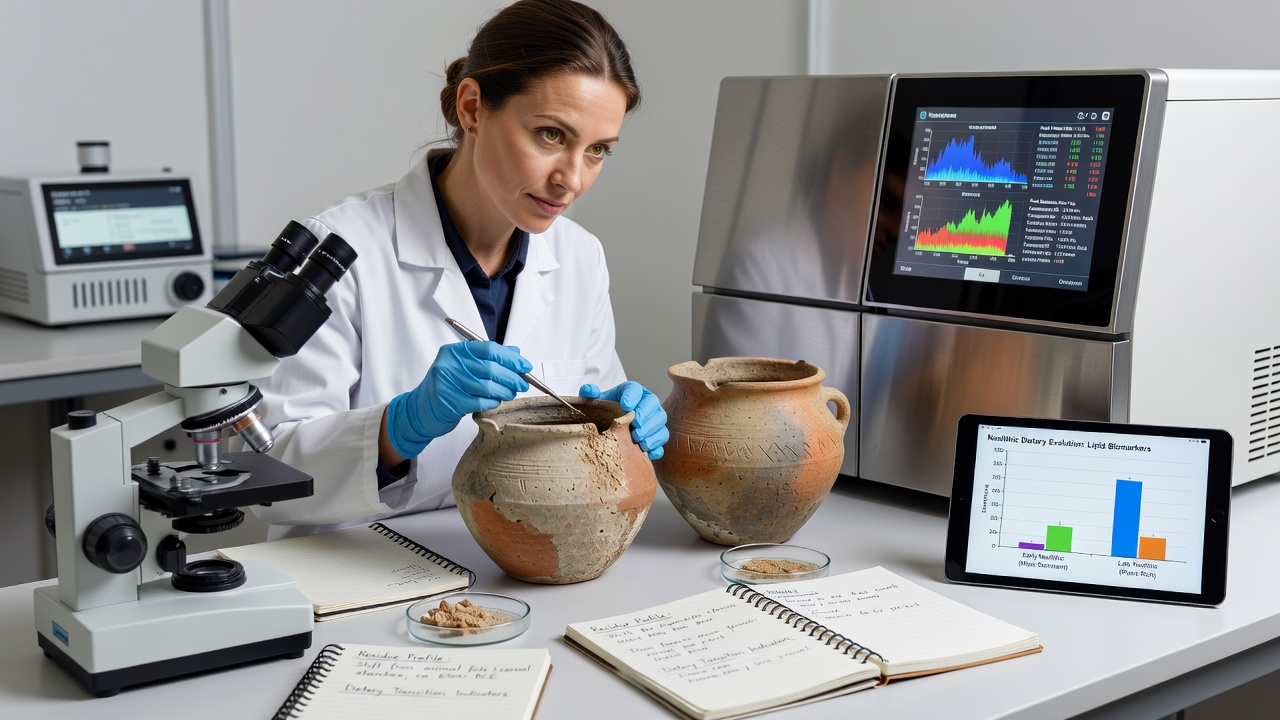
Neolithic communities adopted pottery production around 7000 BCE in several regions, and residue analysis techniques applied to these vessels have documented clear dietary transitions through preserved organic compounds such as lipids and proteins. Scientists extract these residues from porous clay walls using solvents then analyze them via gas chromatography and mass spectrometry to identify specific fatty acids and isotopes that indicate consumed foods.
Analytical Methods Applied to Prehistoric Pottery
Researchers prepare vessel fragments by drilling small samples from interior surfaces then separate absorbed fats through chemical processing before running them through instruments that separate molecular components by weight and structure. Isotopic ratios of carbon and nitrogen within those molecules distinguish between marine resources, terrestrial animals, and plant materials while compound-specific tests reveal whether milk fats or carcass fats were present. Multiple laboratories have standardized these protocols since the 1990s so results from different sites can be compared directly across Europe, the Near East, and parts of Asia.
Documented Shifts Toward Dairying and Cereals
Early Neolithic vessels from Anatolian sites contain residues dominated by ruminant carcass fats whereas later examples from the same regions show increased proportions of dairy fats after 6000 BCE indicating the spread of milking practices alongside animal domestication. In Britain and Ireland pottery sherds dated between 4000 and 3000 BCE carry biomarkers for both milk and processed cereals suggesting communities combined pastoral and arable resources within single vessels for cooking. Data from the Max Planck Institute for the Science of Human History confirms these patterns through large sample sets that track the gradual replacement of wild game markers with domestic species over centuries.
Regional Case Studies Across Neolithic Landscapes
One study of Linearbandkeramik pottery in central Europe identified a rapid increase in dairy residues coinciding with settlement expansion into loess soils where cattle herding became viable. Observers note that vessels from coastal sites in Portugal retain higher levels of marine lipids even after inland groups had shifted toward terrestrial foods demonstrating that local environments shaped adoption rates. In the Levant analysis of Halaf period jars shows early experimentation with milk processing before full pastoral economies developed and researchers link these findings to changes in settlement size and storage needs.
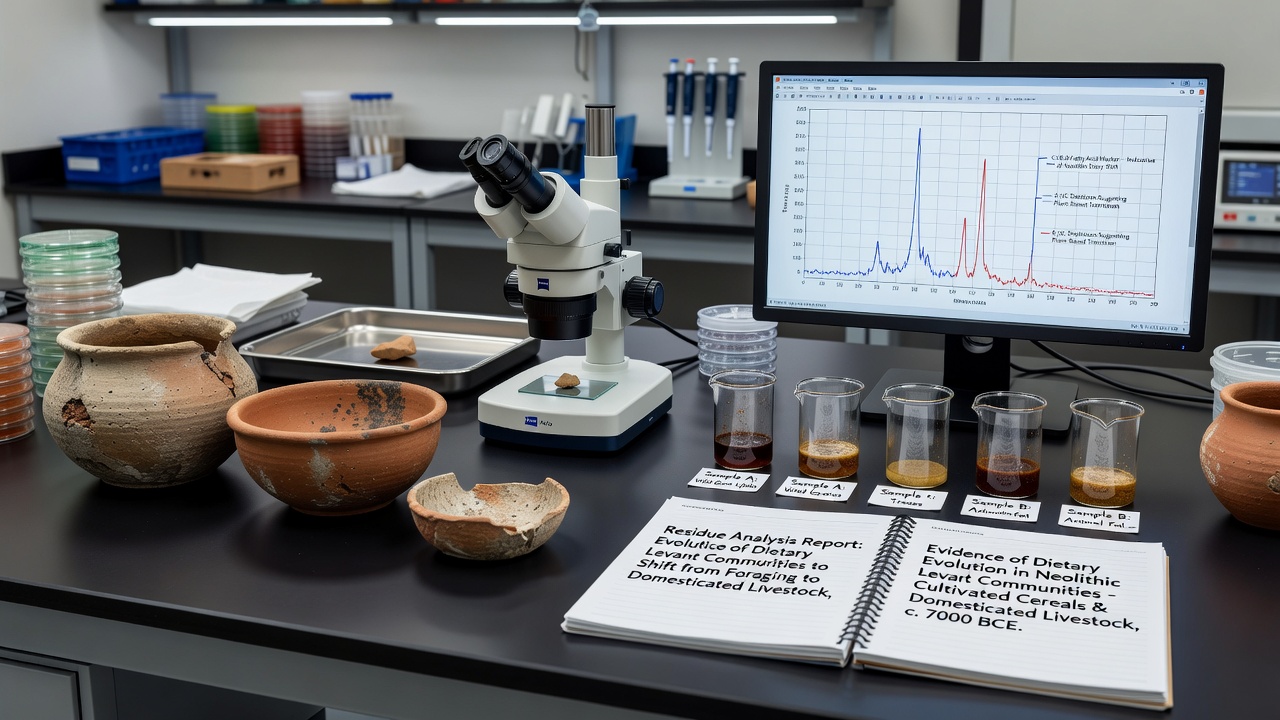
Further work in northern China on Yangshao culture ceramics reveals residues consistent with millet and pig products that replaced earlier reliance on wild tubers and fish around 5000 BCE. Australian researchers collaborating on Eurasian collections have applied the same lipid profiling methods to verify that fermentation markers appear in some dairy residues suggesting communities processed milk into storable forms such as cheese or yogurt.
Broader Implications for Understanding Neolithic Transitions
These chemical signatures provide direct evidence that dietary change occurred unevenly across populations rather than as a uniform revolution with some groups retaining mixed foraging strategies for generations after neighbors had adopted full agriculture. The presence of heated milk fats in vessels also implies technological adaptations such as pottery forms suited to slow simmering that supported new food preparation methods. Ongoing projects scheduled for publication in late 2025 and continuing into 2026 will expand sample coverage into underrepresented areas of Central Asia and the Caucasus where similar transitions likely followed distinct timelines.
Evidence from multiple continents now shows that residue analysis can detect not only what foods were eaten but also how they were combined and processed inside the same containers. Such details refine models of Neolithic economies by replacing broad assumptions with quantified patterns of resource use that vary by site type and chronology.
Conclusion
Residue analysis continues to supply concrete molecular data that maps dietary shifts among Neolithic communities through the material record preserved in clay vessels. The technique links specific food types to chronological phases and geographic zones while highlighting the role of local conditions in shaping adoption of new subsistence practices. As laboratories refine detection limits and expand reference libraries future studies will add further precision to reconstructions of prehistoric food economies across the Neolithic world.