Sam Griffin · 30 October 2026
How Ancient Artisans Crafted Burial Vessels with Tailored Clay Blends
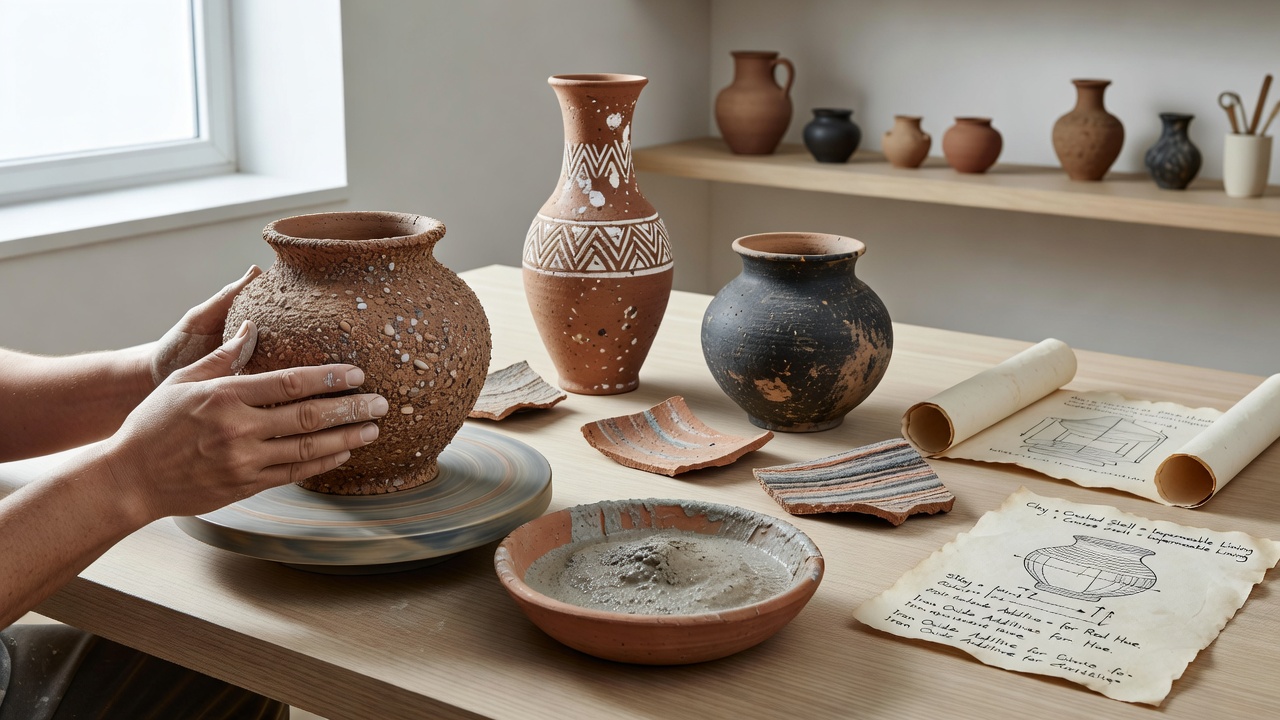
Archaeologists have traced the development of burial vessel production to specific clay recipes that artisans combined with tempers such as crushed shell, grog, and mineral inclusions, and these mixtures varied by region to suit local burial practices and soil conditions. In the Nile Valley during the Predynastic period artisans blended Nile silt with fine sand and straw to produce vessels that resisted cracking during low-temperature firings while maintaining structural integrity when placed in tomb chambers. Similar approaches appear in the Indus Valley where potters added mica and rice husk to alluvial clays creating porous yet stable forms that allowed gases to escape during cremation rites without vessel rupture.Regional Clay Recipes and Their Functional Roles
Studies from multiple excavation sites show that Mesopotamian artisans often mixed calcareous clays with basalt temper to increase thermal shock resistance, a property essential for vessels that underwent secondary firings or were exposed to varying tomb environments. Chinese Neolithic communities in the Yangshao culture incorporated kaolinitic clays with quartz sand achieving higher vitrification points that produced harder surfaces suitable for long-term interment in loess soil. Mesoamerican potters working in the Valley of Mexico combined volcanic ash with local earthenware clays resulting in lightweight vessels that facilitated transport during ritual processions before final deposition.
Researchers have documented how these mixtures directly influenced vessel performance, and data from petrographic analysis reveals consistent patterns where higher grog content correlated with reduced shrinkage rates during drying phases. In the Aegean region artisans favored marl clays tempered with crushed limestone which produced vessels with distinctive white firing surfaces that aligned with local aesthetic preferences for burial goods. Australian Aboriginal groups in the Murray River basin added fiber from local plants to sedimentary clays creating flexible forms that accommodated expansion when filled with cremated remains and sealed with resins.
Preparation Techniques Across Cultures
Artisans followed systematic levigation processes to remove coarse particles before adding controlled amounts of temper, and ethnographic parallels from contemporary traditional potters indicate that precise ratios prevented warping in larger burial urns. In Andean societies potters in the Nazca region blended fine river clays with volcanic scoria achieving vessels that withstood seismic activity common in burial cave sites. European Bronze Age communities mixed grog from broken household pottery with calcareous marls to recycle materials while imparting symbolic continuity between daily life and funerary contexts.
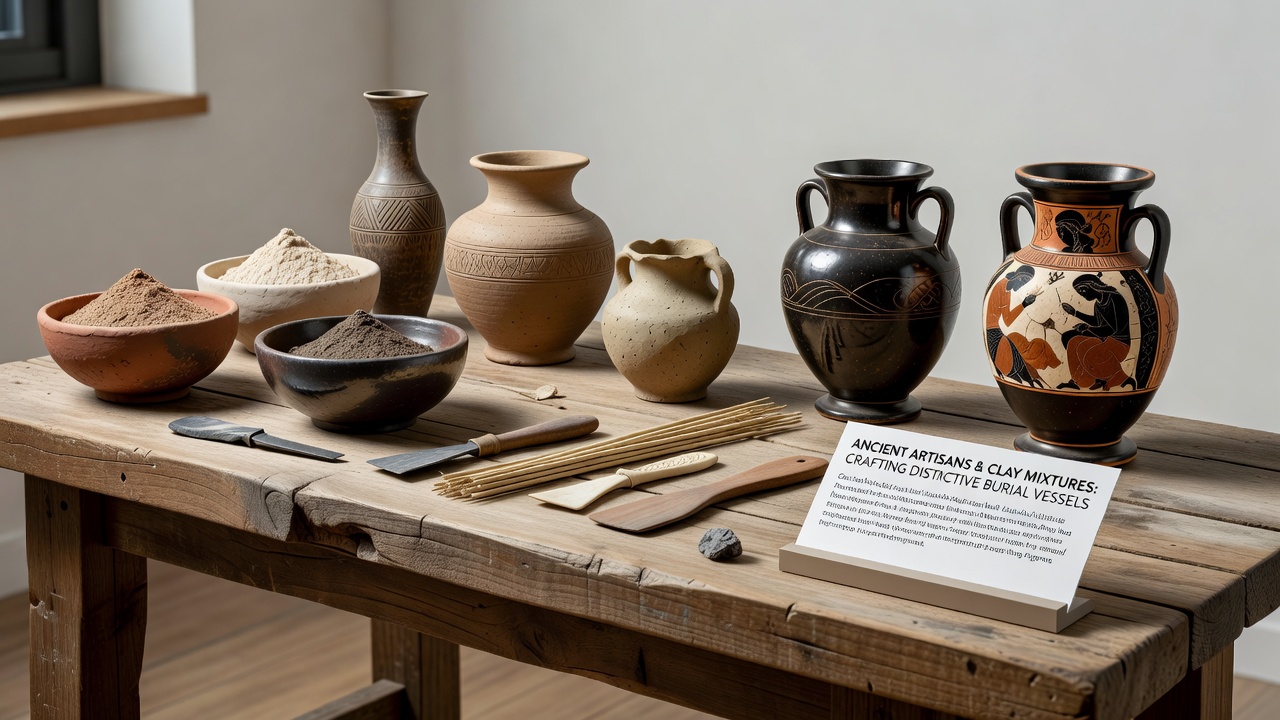
Those who have examined kiln waster piles note that artisans adjusted mixtures seasonally based on clay moisture content, and this adaptability allowed consistent production even when raw materials varied. Japanese Jomon period vessels incorporated shell temper from coastal middens which not only strengthened walls but also introduced calcium that acted as a flux during firing. In sub-Saharan Africa artisans combined termite mound clays with organic ash creating alkaline environments that preserved organic residues inside burial vessels over centuries.
Material Properties and Burial Outcomes
Petrographic studies confirm that specific tempers altered porosity levels allowing some vessels to breathe while others remained impermeable depending on whether remains required desiccation or protection from moisture. Data from neutron activation analysis shows distinct geochemical signatures tied to deliberate choices in clay sourcing and mixing rather than random variation. Observers note that these technical decisions produced vessels with unique fracture patterns that archaeologists now use to distinguish workshop traditions across sites.
As of October 2026 ongoing projects at multiple international research centers continue to refine understanding of these ancient recipes through non-destructive imaging techniques, and findings from these efforts appear in publications from institutions such as the Smithsonian Institution. Additional work coordinated through the Australian National University has mapped temper distribution patterns that correlate with migration routes of early ceramic technologies.
Conclusion
The evidence assembled from global archaeological records demonstrates that ancient artisans developed specialized clay mixtures tailored to the demands of burial vessel function, and these practices reflect deep knowledge of material behavior passed through generations. Continued analysis of vessel fragments from stratified contexts provides increasingly precise reconstructions of the recipes employed, while comparative studies across continents highlight both shared principles and localized innovations in clay preparation. Such technical traditions underscore the sophisticated material science embedded in prehistoric funerary crafts.