Klara Koch · 13 November 2026
Geological Influences on Raw Material Choices for the First Ceramic Containers
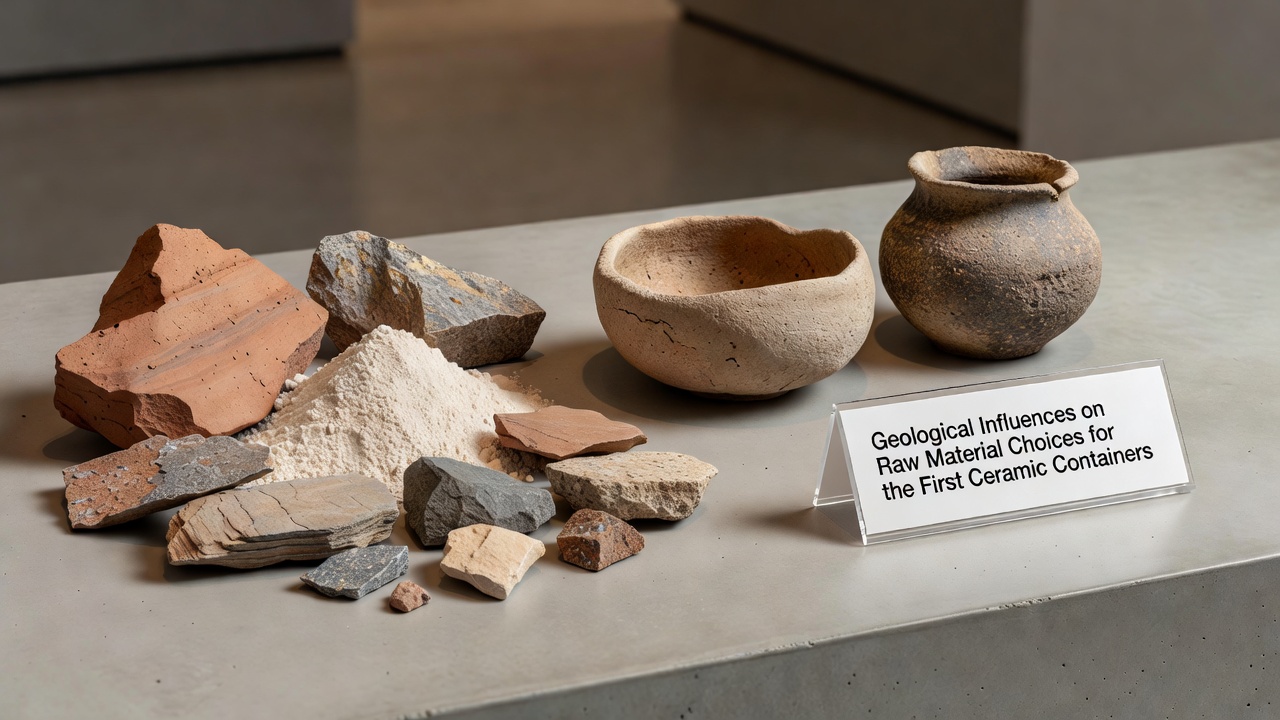
Early ceramic containers emerged in multiple regions during the late Pleistocene and early Holocene as communities selected clays shaped by local bedrock weathering and sediment transport; geological surveys document how specific mineral assemblages determined vessel durability and firing behavior. Researchers trace these choices to exposures of kaolinitic and illitic deposits formed through hydrothermal alteration or fluvial sorting in river valleys and lake margins.
Bedrock Weathering and Clay Mineral Formation
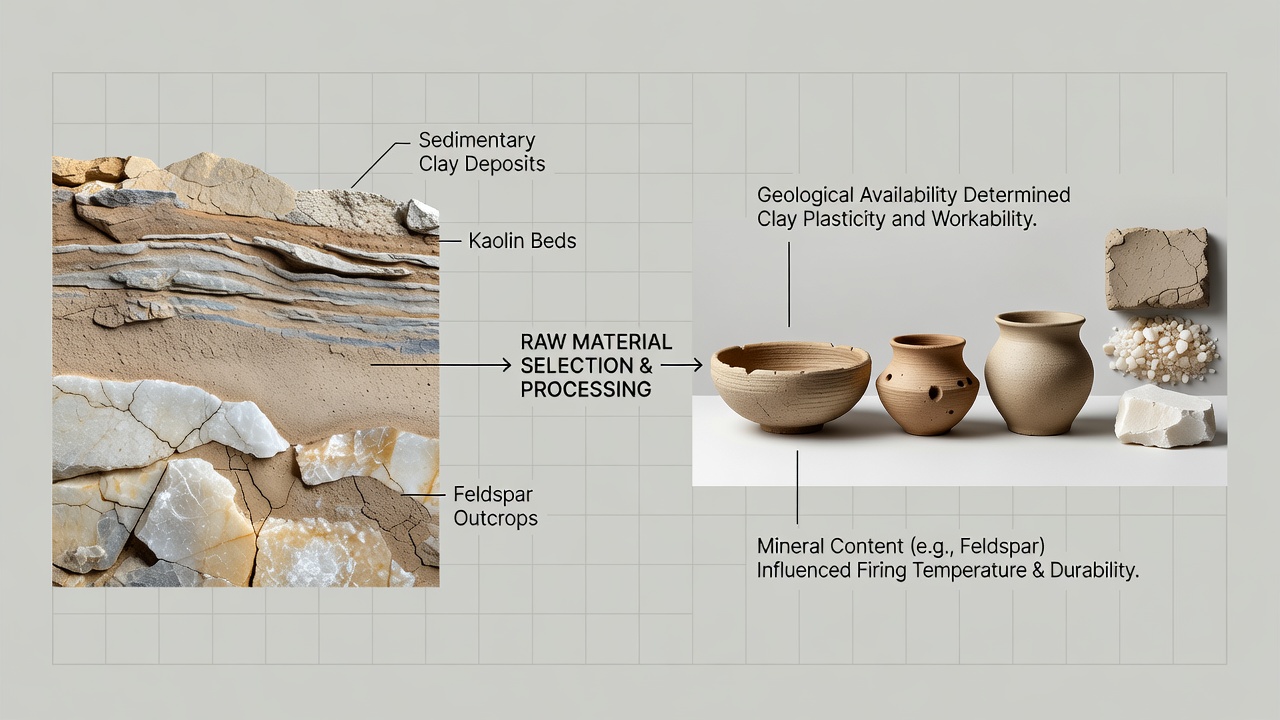
Primary kaolinite formed where granitic and metamorphic rocks underwent prolonged chemical weathering under humid conditions, releasing aluminum-rich residues that artisans later collected for their low shrinkage during drying. In contrast, smectite-rich clays derived from volcanic ash beds offered high plasticity yet required careful tempering to prevent cracking, a pattern confirmed through petrographic analysis of sherds from sites across East Asia and the Near East. Studies of sediment cores show these deposits clustered near fault zones where uplift exposed fresh parent material to erosion.
Regional Geological Controls on Selection
Along the Yangtze River basin, loess-derived silty clays with moderate iron content allowed lower firing temperatures around 600–800 °C, while Mediterranean limestone terrains supplied calcareous marls that produced buff-colored wares after oxidation. Excavations in the Levant reveal preference for terra rossa soils developed on Cretaceous limestones, whose iron oxides aided vitrification without added fluxes. Data from neutron activation analysis further distinguish these sources by trace-element signatures tied to underlying geology rather than cultural preference alone.
But here's the thing: availability shifted with post-glacial sea-level rise, submerging coastal clay beds and prompting communities to exploit inland glacial till exposures instead. In northern Europe, boulder-clay deposits left by retreating ice sheets provided mixed mineralogies that demanded grog temper to counteract excessive shrinkage, a technique documented in early pottery assemblages dated between 6500 and 5500 BCE.
Mineralogical Properties and Firing Outcomes
Quartz and feldspar inclusions naturally present in many fluvial clays acted as internal temper, reducing thermal shock during open-pit firing; researchers note that vessels from granitic catchments consistently show higher quartz percentages than those from shale-derived sources. Thermal expansion coefficients measured on reconstructed pastes match the geological profiles of their source regions, explaining why certain early containers survived repeated heating cycles while others fractured.
Transport and Exchange of Geologically Distinct Clays
Although most early potters used materials within a few kilometers of settlements, petrographic studies identify occasional sherds containing andesitic temper sourced from distant volcanic provinces, indicating selective transport when local options lacked desired refractory qualities. According to analysis published by the University of Sydney, such movement followed established routes along major drainage systems where geological diversity increased raw-material options. In November 2026 the International Association of Geoarchaeologists will convene sessions examining how tectonic activity influenced these procurement networks across the Pacific Rim.
Yet the majority of production remained tightly coupled to immediate geological settings, with communities avoiding expansive smectitic clays unless mixed with local sands to improve workability. Evidence from the Canadian Museum of Nature collections shows that subarctic potters favored illite-rich lacustrine clays because permafrost-limited weathering produced finer particle sizes suited to thin-walled vessels.
Conclusion
Geological mapping combined with ceramic petrography demonstrates that raw-material choices for the first containers followed predictable patterns dictated by bedrock type, weathering intensity, and sediment transport mechanisms. These constraints produced distinct regional traditions visible today in the mineralogical fingerprints preserved within surviving sherds. Ongoing fieldwork continues to refine understanding of how earth processes shaped one of humanity's earliest pyrotechnologies.