Sam Griffin · 18 September 2026
Chalcolithic Vessel Ornamentation as Indicators of Cultural Exchange Dynamics
Chalcolithic vessel ornamentation reveals patterns of cultural exchange that archaeologists trace through specific decorative techniques and motif distributions across multiple regions during the period spanning roughly 5000 to 3000 BCE. Researchers examine incised lines, painted bands, and stamped patterns on ceramic containers to map interactions between communities in the Near East, southeastern Europe, and parts of Central Asia. Data from excavation reports indicate that certain geometric designs and figurative elements appear consistently at sites separated by hundreds of kilometers, suggesting movement of both objects and ideas rather than isolated local development.
Core Techniques in Chalcolithic Pottery Decoration
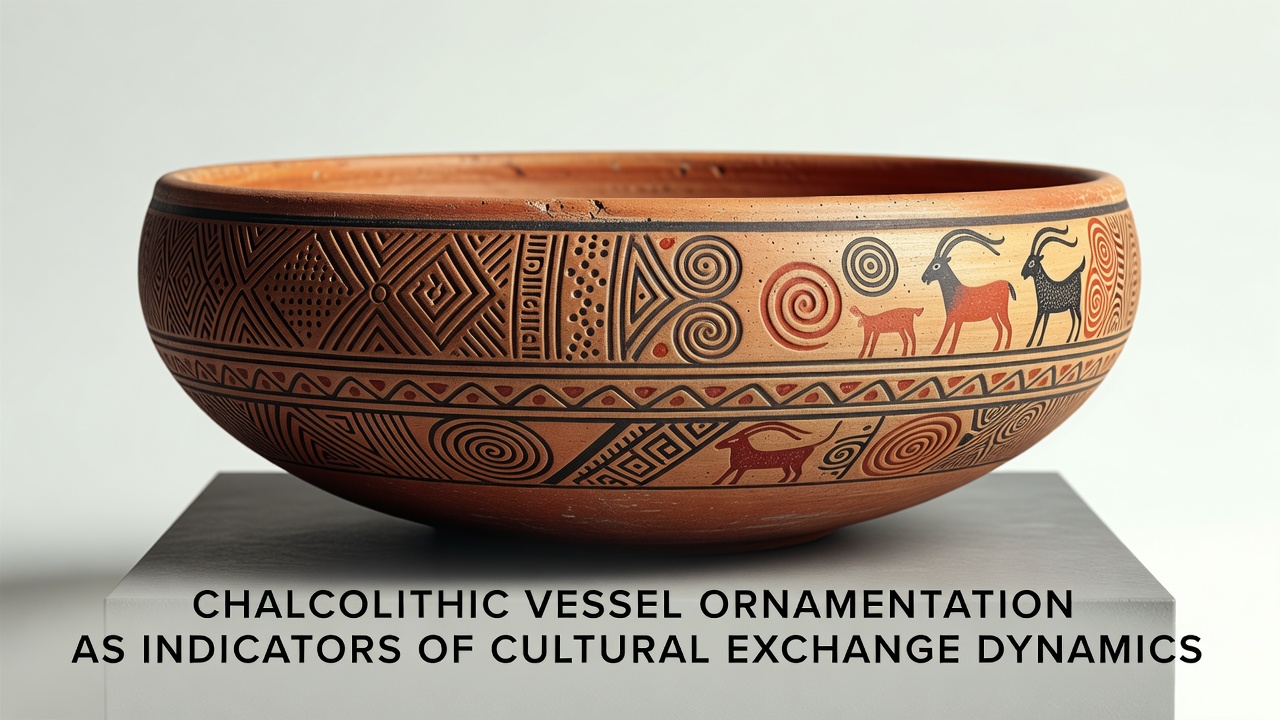
Potters during this era combined surface treatments such as burnishing, incision, and applied relief to create durable ornamental schemes. Incised motifs often include chevrons, spirals, and cross-hatching executed with sharp tools before firing, while painted decorations rely on mineral-based slips in red, black, and white hues. Those who've studied collections at multiple institutions note that the layering of these methods on single vessels points to shared technical knowledge transmitted through direct contact or intermediary traders. Evidence from stratified deposits shows progressive refinement of these techniques over centuries, with earlier examples featuring simpler linear incisions that later incorporate more complex interlocking patterns.
Regional Distributions and Exchange Indicators
Comparative analysis of assemblages from the Levant and the Balkans demonstrates overlapping ornamental repertoires that exceed what random convergence would produce. Sites in the southern Caucasus yield vessels bearing stamped concentric circles similar to those recovered from northern Greek contexts, and chemical sourcing of clay fabrics confirms that some finished pieces traveled along established routes. Observers note that the presence of non-local raw materials in pigment recipes further supports models of resource circulation tied to decorative practices. But here's the thing: not every shared motif indicates long-distance trade, because some elements may reflect parallel responses to environmental constraints or aesthetic preferences that arose independently.
Documented Case Examples
One study of material from the Varna necropolis and contemporary settlements in Anatolia revealed matching vessel forms adorned with identical rope-impressed bands around the shoulders. Researchers at the University of Michigan's Kelsey Museum of Archaeology have documented these correspondences through detailed motif catalogs that allow quantitative comparison across collections. Another set of finds from the Iranian plateau includes painted vessels whose border designs align closely with examples from Mesopotamian sites, supporting interpretations of seasonal exchange networks involving herders and settled groups. Data compiled by the European Association of Archaeologists indicate that ornamentation styles diffused more rapidly than vessel shapes themselves, implying that aesthetic elements transferred through social mechanisms such as marriage alliances or ritual gatherings.
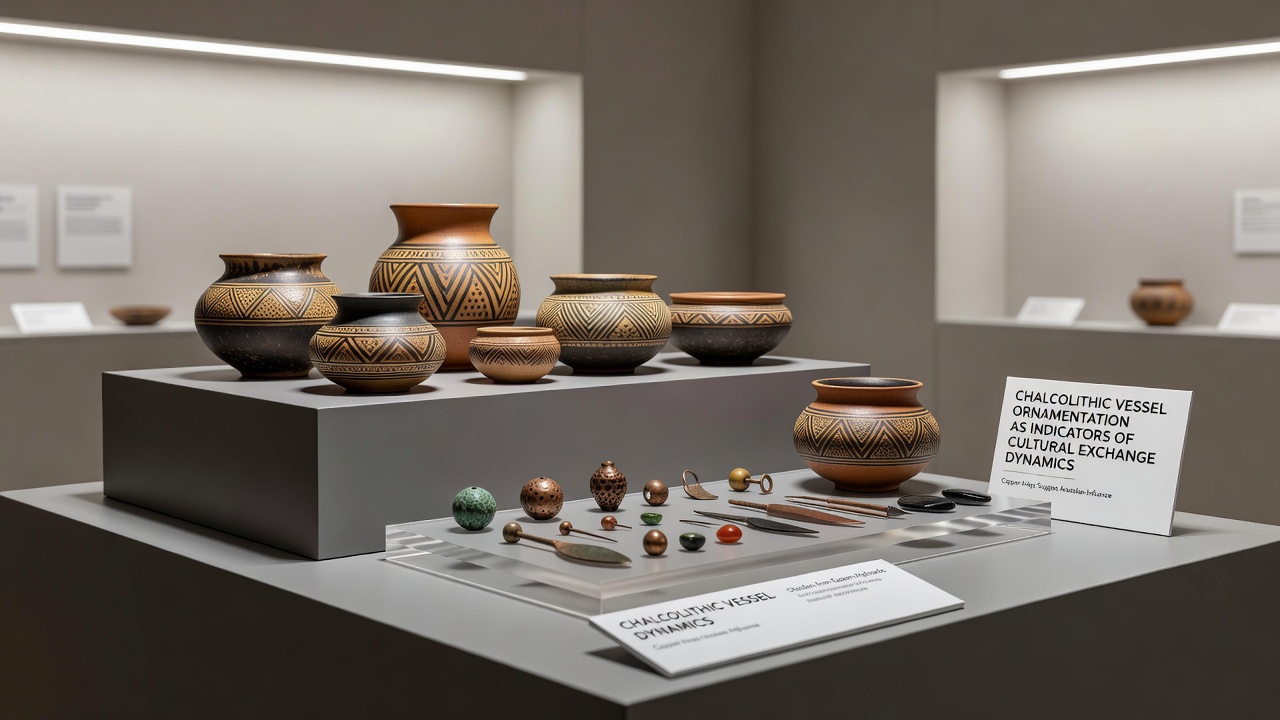
Further examination of lipid residues on decorated sherds provides additional context, revealing that many ornately finished containers held commodities such as oils or resins that themselves moved between groups. This functional dimension strengthens arguments that ornamentation served both practical signaling and symbolic roles within exchange systems. Figures from recent surveys in the Carpathian basin show clusters of stylistically linked vessels at locations interpreted as seasonal aggregation points, where communities gathered to exchange goods and information.
Methodological Approaches to Tracing Influences
Modern analytical protocols combine stylistic seriation with petrographic thin-section analysis and portable X-ray fluorescence to distinguish between imported vessels and local imitations. Teams working in Israel and Romania have applied network analysis software to motif frequency data, producing visualizations that highlight central nodes of stylistic innovation. These models suggest that certain production centers exerted disproportionate influence on surrounding areas during the middle Chalcolithic, with peripheral sites adopting subsets of the core decorative vocabulary. Yet the same datasets also reveal back-and-forth flows, where motifs originating in one region reappear in modified form after circulating through others.
Implications for Understanding Prehistoric Connectivity
The cumulative record of vessel ornamentation therefore functions as a durable proxy for social and economic linkages that left few other material traces. Patterns observed in the distribution of specific stamp seals used to create repeated designs correlate with the spread of metallurgical knowledge during the same centuries, reinforcing the view that craft traditions moved together along common pathways. Research published by the Australian National University documents parallel developments in the Indus periphery where comparable incised motifs coincide with the appearance of copper artifacts of Levantine derivation. Such convergences allow archaeologists to reconstruct interaction spheres that operated at multiple scales, from short-range seasonal movements to longer cycles spanning generations.
Conclusion
Chalcolithic vessel ornamentation continues to supply concrete evidence for the dynamics of cultural exchange because the decorative choices preserved on ceramics encode information about contact, transmission, and adaptation. Ongoing fieldwork and laboratory analyses refine the chronological resolution of these patterns, while expanding datasets from understudied regions clarify the geographic extent of particular stylistic horizons. The integration of traditional typological methods with emerging digital tools ensures that interpretations remain grounded in the physical characteristics of the artifacts themselves.